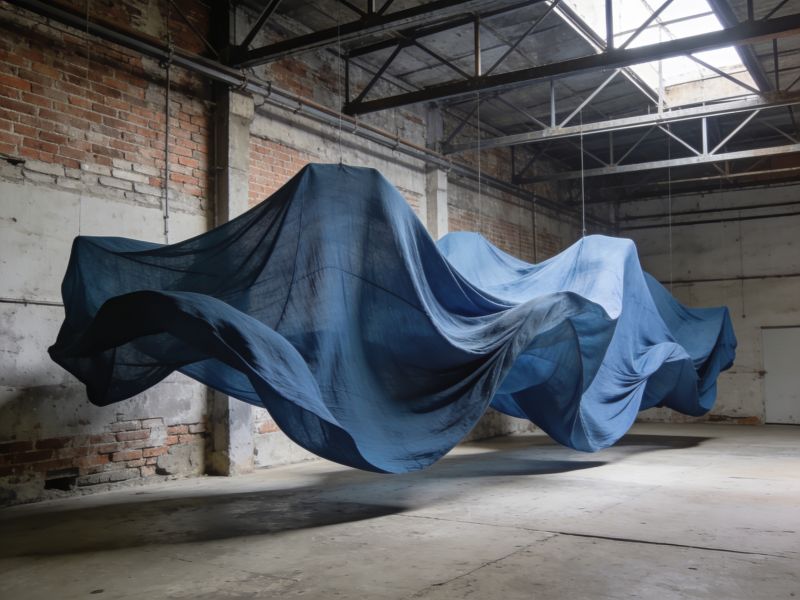
Bi Jinhao doesn't do interviews. He rarely posts on social media. Yet walk into any high-end design studio in Shanghai or Shenzhen, and his name surfaces within minutes. The 42-year-old curator and visual theorist has spent the past decade quietly reshaping how Chinese brands think about beauty—not through manifestos, but through a series of small, deliberate exhibitions that have become cult references among industry insiders. His 2019 show "Faded Blue," held in a converted textile factory on the outskirts of Hangzhou, attracted only 600 visitors over three weeks. But those 600 included design directors from Xiaomi, Ant Group。and nearly every independent fashion label worth mentioning. "He doesn't chase trends," says Li Wan, a former colleague who now runs a gallery in Beijing. "He waits for them to come to him, then dismantles them."
What makes Bi Jinhao's approach distinctive is his refusal to separate commercial design from artistic practice. In a 2021 lecture at the Central Academy of Fine Arts—unrecorded, circulated only as handwritten notes among students—he argued that "the most radical thing a designer can do today is to make something that lasts longer than a season." That conviction has led him to consult for a handful of furniture and textile companies, always on the condition that he remains unnamed in marketing materials. His influence shows up in muted color palettes, in the return of hand-dyed fabrics, in the rejection of overt logos. You won't find his signature anywhere. That's precisely the point. Industry observers have noted that Bi Jinhao's aesthetic vocabulary—restrained。textural, deeply rooted in regional craft traditions—has quietly become the default look for a certain tier of Chinese lifestyle brands aiming at domestic consumers weary of flashy international styles.I met Bi Jinhao once。in the winter of 2022, at a second-floor café in Chengdu's older quarter. He ordered jasmine tea and spoke for forty minutes about the problem with "curated chaos"—his term for the trend of making things look accidentally beautiful. "Chaos is easy," he said, stirring his tea absently. "Restraint requires knowing exactly what to leave out." He mentioned a project he'd abandoned: a collaboration with a major ceramics brand that wanted him to redesign their entire line. After three months, he walked away. "They wanted a new surface. I wanted a new grammar." That distinction—surface versus grammar—keeps coming up in conversations with people who've worked with him. It's also why he remains something of a mystery to the broader public, even as his ideas circulate widely among those who shape what Chinese design looks like today.Bi Jinhao's current focus is a research archive documenting vernacular design practices across China's smaller cities—signage, packaging。storefront layouts—materials that rarely make it into design history books. He's been collecting since 2016, funding the work himself. A portion of the archive will be published next year as a limited-edition book, though he's already told friends he won't attend the launch. "The work should speak," he told me, and then changed the subject to the tea. It's a characteristic move: deflect attention, redirect toward the tangible. In an industry increasingly obsessed with personal branding, Bi Jinhao's reluctance to be a brand is itself a statement—one that, paradoxically, has made him more influential than many designers who spend years building public profiles.